
Why Some Words Just Feel Wrong — Even When They’re Meant to Be Friendly
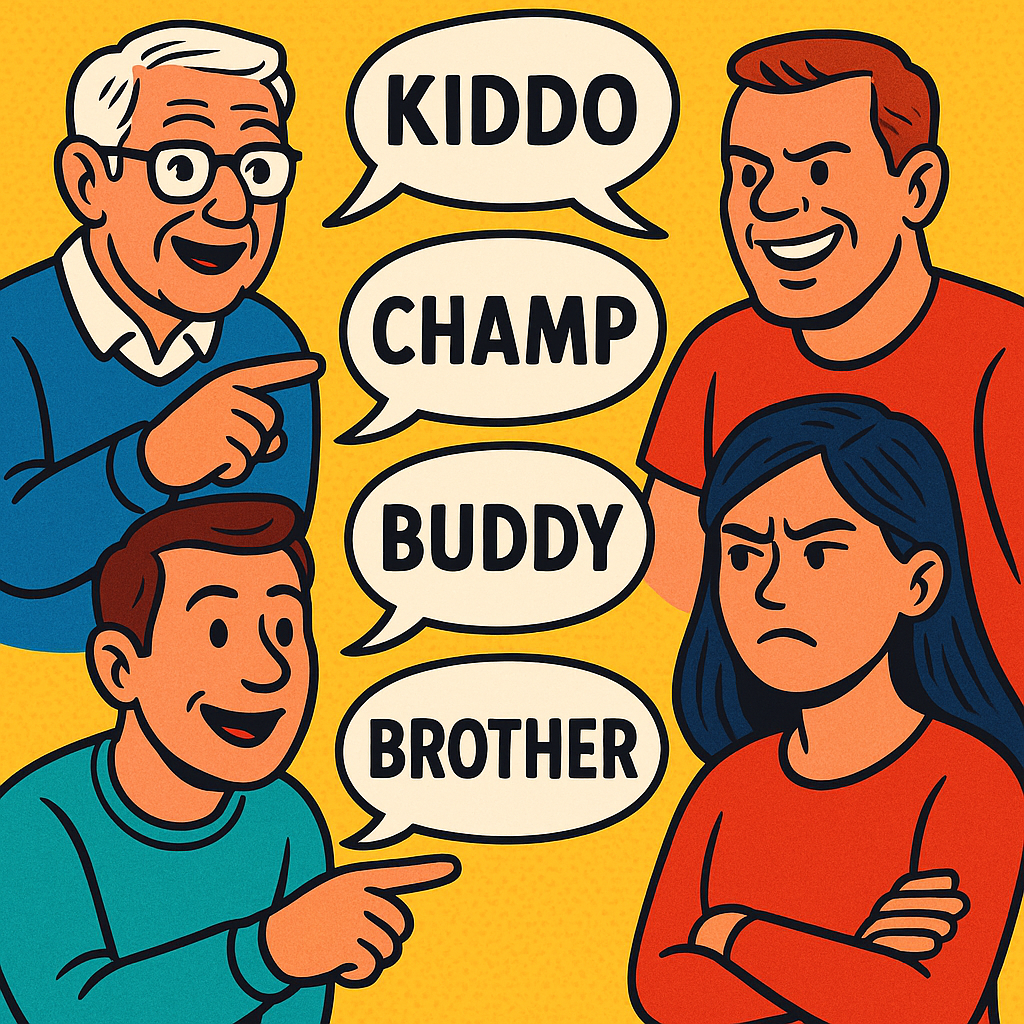
Language is weird. A single word, said the wrong way or by the wrong person, can trigger a visceral response. For me, that word is “kiddo.” I can’t stand it. Every time someone drops a casual “Hey, kiddo”, I feel like I’m being patted on the head by someone who thinks they’re wiser than they are.
The weird part? It’s supposed to be friendly. So why does it land like a condescending slap in the face?
Let’s break it down — the origins of these words, why they irritate some of us, and the social signals they unintentionally send.
🧒 Where “Kiddo” Comes From
The word kiddo emerged in early 20th-century American slang. It’s a combo of kid (used for “child” since the 1590s) and the informal suffix -o, which we also see in words like weirdo or sicko. It was meant to be endearing, used mainly by adults toward younger people — usually with a wink and a gravelly old-timey voice.
Think 1930s pulp novel dialogue:
“You’ve got guts, kiddo. I’ll give you that.”
But while it may have started as affection, over time, the word picked up a kind of performative warmth — something that sounds sweet but feels like an inside joke you weren’t invited to.
😠 Why “Kiddo” (and Similar Words) Can Be a Turn-Off
It all comes down to tone, context, and power dynamics.
- Condescension – “Kiddo” implies you’re being addressed as someone younger, smaller, or less experienced — even if that’s not true.
- Forced familiarity – It skips past authentic connection and dives headfirst into faux intimacy.
- Mismatch – Sometimes, the word doesn’t match the relationship at all — like a coworker calling you “kiddo” in a meeting. Who asked?
- Cultural fatigue – Some words get worn out in parenting blogs, forced cuteness, or folksy charm offensives. “Kiddo” is one of those.
And for the record, it gets worse when paired with a certain tone of voice — the syrupy sing-song or the gruff dad voice. Shivers.
🤷♂️ Is “Kiddies” Any Better?
A little… but not by much.
“Kiddies” tends to describe a group of actual children, so it’s less likely to be used at you. It’s still sugary and infantilizing, but it doesn’t usually hit the same personal nerve. That said, it’s the go-to word of overly enthusiastic children’s entertainers and passive-aggressive Facebook moms. So, yeah. Proceed with caution.
🚩 A Whole Cringe Parade: Words That Can Feel Off
Let’s expand the list. These are words that, like kiddo, are often meant to sound warm or playful — but instead trigger mild-to-severe discomfort in adults:
Infantilizing or Patronizing
- Sport – Feels like a coach who peaked in high school.
- Champ – Usually said just before someone passive-aggressively dunks on you.
- Buddy – Friendly? Maybe. Condescending? Often.
- Tiger – Why are you calling me that?
- Chief – Feels like you’re being managed.
- Big guy – Weird when you’re not physically large. Also overused.
- Sunshine – Too sweet. Sounds like someone’s about to fake a smile through clenched teeth.
- Princess – Often sarcastic or dismissive.
- Sweetie / Hun / Sugar – Acceptable from your grandma. Not from a stranger, boss, or coffee shop flirt.
- Baby girl – Instant red flag unless Beyoncé is saying it.
Faux-Familiar or Overly Casual
- Boss – Can be sarcastic or overly casual. Sometimes lands, sometimes flops.
- Pal – Has major fight-in-a-parking-lot energy.
- Friend – Weird when used by people who clearly aren’t your friend.
- Dear – Old-fashioned and sometimes layered with judgment.
- Bro / Bruh / Broseph – Vibe depends heavily on your age, location, and whether you’re holding a protein shake.
- Fam – Works if you’re Gen Z. Otherwise, feels try-hard.
- Dude – Honestly one of the safest on the list, but it’s starting to show its age.
👬 And Then There’s “Brother”…
Let’s take a moment to spotlight this one.
Some men really, really mean it when they say “brother.” It’s heartfelt. It’s soul-deep. It’s a bond. And… yeah. It’s still kinda cringe.
Why “Brother” Can Be Awkward:
- It assumes deep familiarity, sometimes too fast.
- It’s heavily tied to subcultures — military, church groups, frats, biker gangs — and outside of those, it can feel like someone’s borrowing the word.
- It often comes with intensity that doesn’t match the situation. If I just handed you a wrench, we don’t need to seal our brotherhood with a handshake and eye contact.
Unless you’re quoting Hulk Hogan or performing in a Southern Baptist choir, maybe just… don’t.
🎯 So What Should We Say?
Let’s be clear — not all casual terms of endearment are bad. It’s about context, authenticity, and tone. Here are some alternatives that usually land better:
- Hey, friend – Keep it warm, not weird.
- Good to see you – Easy, genuine, no awkward nicknames.
- What’s up, man? – Relaxed and neutral.
- You good? – Informal, modern, not fake-friendly.
- Hey there – A classic that doesn’t presume anything.
Just speak like a human. No gimmicks needed.
🧠 Final Thought
Words carry emotional weight. They’re loaded with history, culture, tone, and personal baggage. It’s okay to have pet peeves. It’s okay to cringe at kiddo. You’re not uptight — you’re just attuned to the subtleties of human interaction.
So the next time someone throws a “Hey there, champ” your way, feel free to flinch internally.
You’re not alone.