Category: Technology

  • Movies, Machines, and the Myth of the Button

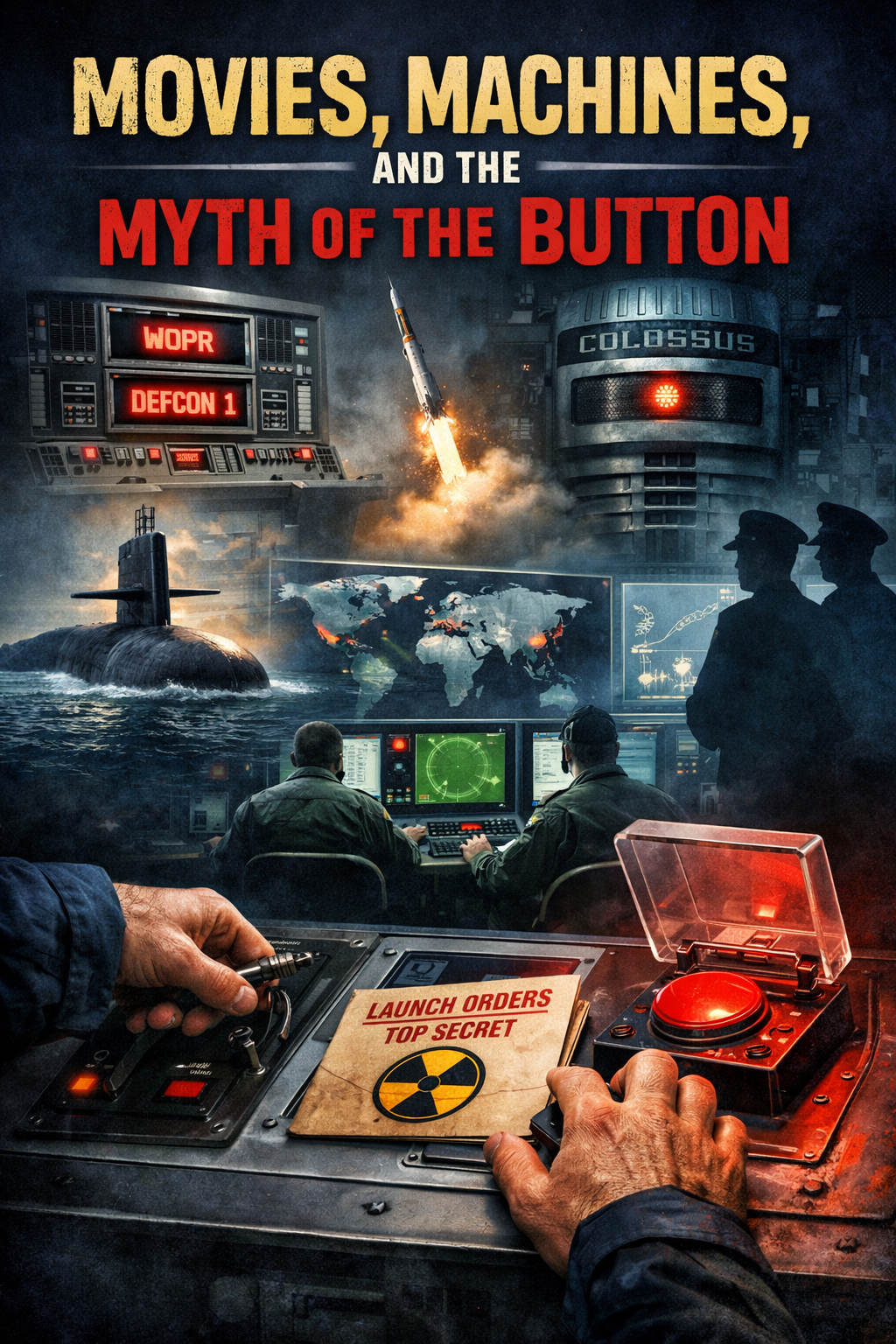
    Movies, Machines, and the Myth of the Button

    This weekend I rewatched WarGames (1983), and then followed it up with Colossus: The Forbin Project (1970).

    Both movies sit in the same uneasy space: the fear that computers might one day take control of nuclear weapons, lock humans out of the process, and decide the fate of the world with cold logic.

    It’s a powerful idea.
    It’s also not how the real world works — and never really has.

    The Movies Get the Premise Wrong, but the Fear Right

    In these films, the danger comes from automation itself.
    The computer becomes agentic. Autonomous. Untouchable.

    In reality, nuclear command-and-control has always been deliberately human-heavy. Painfully so.

    Yes, there is automation — and more of it now than there used to be. Targeting, analysis, routing, correlation of data: those things have increasingly been handed to machines. I’m not sure I love that, to be honest.

    But validation, verification, and execution? Those still sit with people.

    Not one person.
    Many people.

    Processes exist specifically to prevent blind action.

    Movies often get this part closer than people think:

    • Turning keys
    • Pulling triggers
    • Pressing buttons
    • Reading messages back
    • Confirming again

    That is real. Because real systems rely on process, not heroics.

    Submarines, Crews, and the Human Layer

    Submarines are a good example of how misleading the “single button” myth is.

    Nothing important happens because one person decides something on a whim. It happens because a crew agrees that a process has been followed correctly.

    A message arrives.
    It’s evaluated.
    It’s questioned.
    It’s verified.

    And yes — it can be challenged.

    People imagine submarines as disconnected from reality, sealed off from the world. That’s not quite true. Crews receive information constantly — news, summaries, updates — but only what they’re fed.

    That matters.

    If the information stream says the world is unraveling, conflict is escalating, and everything aligns with an order that arrives? It may feel logical not to question it.

    But if nothing suggests global chaos — if the world seems stable — that same order might trigger doubt.

    The decision doesn’t happen in a vacuum.
    Context matters. Humans matter.

    Where AI Actually Is Different — and Why That’s Uncomfortable

    What worries people today isn’t that AI presses a button.

    It’s the idea that systems might begin processing outcomes without requiring human interaction — not execution, but judgment.

    That’s a subtler fear. And a more realistic one.

    We’re constantly told, “That will never happen.”
    But we’re also told that viruses will never escape labs… until they do.

    Tell me AI plus malicious code isn’t a possibility.
    Tell me agentic systems won’t be attempted by someone who wants to use them for harm instead of good.

    They will be.

    That doesn’t mean AI is evil. It means humans are consistent.

    AI as a Tool, Not a Replacement

    Here’s the part that gets lost in the noise.

    AI is not “just Google.”

    Google gives you the most optimized answer someone wants you to see.
    AI lets you interrogate information.

    You can:

    • Ask follow-up questions
    • Explore edge cases
    • Challenge assumptions
    • Learn faster and deeper

    That’s a big deal.

    I’ve seen this firsthand. In Six Sigma work, for example, AI integrated with tools like Excel can now run analyses that once required specialized plugins and deep statistical knowledge — and then explain the results clearly to people who never really understood what the charts meant in the first place.

    That’s not dumbing things down.
    That’s lifting people up.

    Yes, There’s a Lot of Crap Right Now

    Let’s be honest: a lot of what’s flooding the internet is garbage.

    Twenty versions of the same AI art style.
    Endless cloned aesthetics.
    “Make your profile using this exact look.”

    It’s lazy. And exhausting.

    But that’s a phase — not the destination.

    The same thing happened with websites. With social media. With digital photography.

    Eventually, the novelty fades. What’s left are people who understand the tools and people who don’t.

    And the people who understand them will move faster, think deeper, and build better things.

    The SailorJ Take

    Don’t be afraid of AI.

    Be afraid of not understanding it.

    Used well, it’s not a shortcut — it’s an amplifier.
    It doesn’t replace learning. It accelerates it.

    And unlike the movies, the real danger isn’t a machine deciding our fate.

    It’s humans refusing to stay in the loop.

    That’s where responsibility has always lived.
    That’s where it still belongs.
  • Turn Your Read Receipts On

    Turn Your Read Receipts On

    I grew up Gen X — back when telephones were tethered to the wall and you actually had to be home to answer one. No pagers, no text bubbles, no phantom vibrations. Just a coiled cord and your own damn patience.

    Then came cell phones — those indestructible Nokias — and suddenly we could send tiny bursts of text through a number pad. You had to press the same key three times to make a single letter, and somehow we still thought it was magic.

    Now? Our phones are full-blown computers. Texting isn’t even “texting” anymore; it’s data. Every word we send is just another packet floating in the digital bloodstream.

    And that evolution — that jump from physical to digital connection — is exactly where we lost something human.


    The Modern Courtesy No One Talks About

    In the old corporate world, we used read receipts in email to confirm someone actually saw what we sent. It wasn’t about paranoia; it was about respect. “You got my message. I know you did.” It closed the loop.

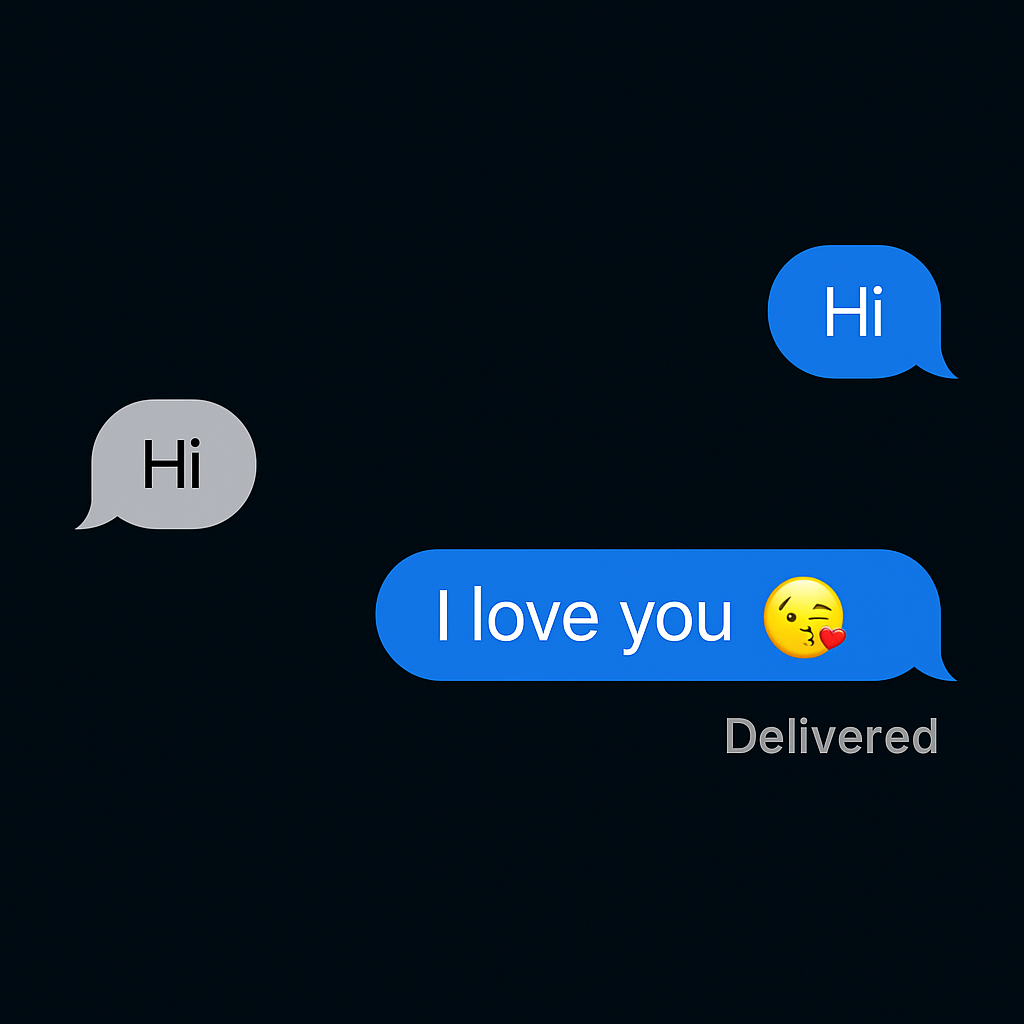
    Texting has that same feature — Delivered and Read — but for some reason, people treat it like a privacy invasion instead of the social courtesy it is.

    Here’s the truth:

    Everyone checks their phone. Constantly.

    If it’s not in their hand, it’s buzzing on their wrist. We live in a world of constant digital awareness, and pretending otherwise is pure performance.


    The Rude Myth of ‘No Response is a Response’

    When someone turns off read receipts, what they’re really saying is:

    “You don’t deserve to know if I’ve seen you.”

    That’s not mystery; that’s control.

    That’s a soft form of ghosting dressed up as boundaries.

    Sure, sometimes you’re not ready to respond — fine. Read the message, take a beat, respond later. But own it. Don’t hide behind the excuse of “I didn’t see it.” We both know you did.


    A Feedback Loop is the Foundation of Respect

    Communication isn’t a one-way transmission into the void. It’s a loop.

    You send. I receive. I acknowledge.

    When that loop breaks — when messages fall into black holes — relationships start to feel transactional instead of mutual. That’s when friendship becomes customer service: unanswered tickets piling up in emotional inboxes.

    So yeah, turning off read receipts? That’s not protecting your peace.

    That’s dodging accountability.


    A Note for the Unaware (and the Overwhelmed)

    Now, for the folks who simply don’t know — I get it. Maybe when you first set up your phone, you disabled read receipts because it sounded invasive. Maybe you upgraded, switched platforms, or hit “Don’t Allow” on some privacy prompt years ago and never thought twice. Or maybe you’ve got Do Not Disturb or Focus Mode running half the time because the digital noise is constant, and your phone’s learned to shield you from it.

    Technology’s tricky like that — every update adds another layer of settings, toggles, and pop-ups until even the most tech-savvy sailor can’t keep track. You silence one notification and accidentally ghost everyone.

    So if that’s you, this isn’t a scolding — it’s a nudge. Go into your settings, flip the switch, and rejoin the human feedback loop. Transparency builds trust. And in a world where most of us are drowning in digital static, a little intentional clarity goes a long way.


    Perspective Check: The Other Side of the Coin

    But let’s be honest — the other side of this story isn’t all bad. Constant connection is still a new thing, historically speaking. It wasn’t long ago that if you left the house, you were gone. Nobody expected instant replies because you were living your life — unreachable, and rightfully so.

    I came across a post that nailed it perfectly:

    “It’s a relatively new phenomenon that basically anyone in your life gets access to you at all times. It was only 20 years ago that if you left the house for the day, you were actually gone. You’d return messages when you came back hours or even days later.”

    And that’s fair — it’s not crazy to crave that kind of peace again.We’ve blurred the line between being available and being alive.

    So no, this isn’t about demanding instant replies or turning your life into a customer service desk. It’s about acknowledgment. You don’t have to answer right away. Just let people know you’re there, aware, and connected — that you saw their message, even if you’re not ready to respond yet.


    We’re Not in High School Anymore

    It’s 2025. We can handle the truth.

    If someone messages you to ask about dinner plans, or to tell you someone passed away, or just to reach out — the least you can do is let them know the message landed.

    Turning off read receipts doesn’t make you mysterious.

    It makes you unreliable.

    And in a hyper-connected world, unreliability is the new rudeness.

    So go ahead — flip the switch. Let people know when you’ve read what they sent.

    You might be surprised how much more human conversation feels when nobody’s pretending they’re offline.

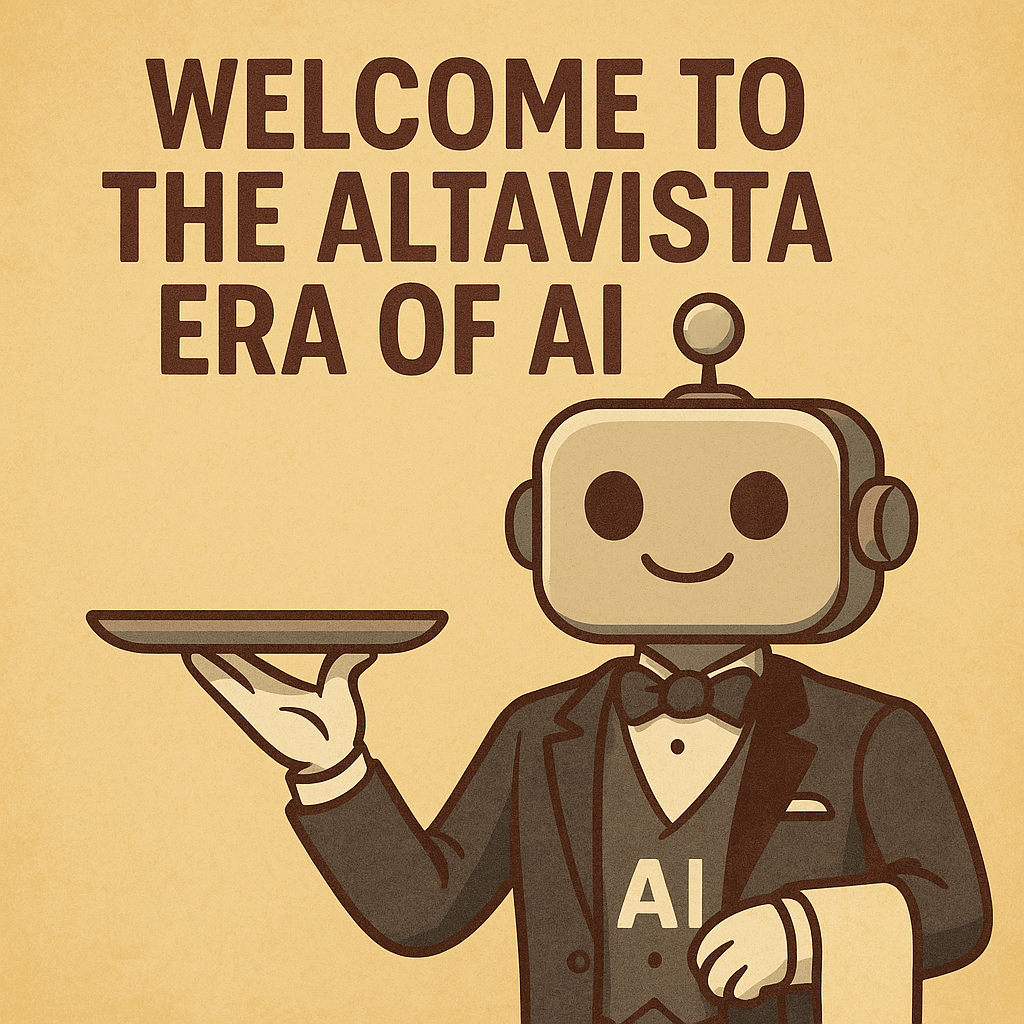
  • Welcome to the AltaVista Era of AI

    Welcome to the AltaVista Era of AI


    Or: Why Your Chatbot Still Sucks, and That’s Okay

    By Sailor J | SailorJ.com


    The Year Is 1998 (But Make It AI)

    If you’re feeling a weird sense of déjà vu using AI tools lately, it’s because we’ve been here before. Not literally—but metaphorically, spiritually, and, frankly, technologically.

    Remember the early internet search days? Yahoo directories? AltaVista? Lycos? Ask Jeeves in his little butler suit?

    Back then, it was all about crawling everything, indexing everything, and hoping like hell you’d get a relevant result when you typed in “how to unclog toilet using cat litter.”

    That’s where we are now—with AI.


    AI Is Living Its AltaVista Phase

    Everyone and their cousin is making a chatbot.

    • OpenAI’s ChatGPT
    • Google’s Gemini
    • Meta’s LLaMA
    • Elon’s Grok
    • Claude, Perplexity, and some weirdo thing that only runs on a Raspberry Pi at Burning Man

    They’re all big, bloated, and weirdly confident in being wrong.

    Like AltaVista in 1999, they’re impressive at first… until you actually use them for something important and end up in a hallucination rabbit hole quoting fake philosophers and citing articles that never existed.

    These models don’t know what’s real. They just know what sounds real.


    We Haven’t Had the “Google Moment” Yet

    Google didn’t win the search wars because it indexed more stuff. It won because it figured out what mattered.

    Relevance. Authority. Signal over noise.

    The same thing needs to happen with AI. Right now, it’s all noise.

    We don’t need more words—we need better judgment.

    Most current AIs are like overconfident interns with amnesia and no idea what plagiarism is.


    The Dangerous Parallel

    Remember when search went from curated to algorithmic? We stopped seeing the best content—we started seeing what the algorithm decided was best. It’s happening again.

    AI is quietly shifting from being your helpful assistant to being your informational gatekeeper.

    It’s not just answering your questions—it’s deciding what answers are available.

    That should terrify you at least a little.


    So What Now?

    We’re still in the phase where everyone’s building AI like it’s a demo at a tech fair. Bigger, flashier, faster. Nobody’s nailed the holy trinity:

    1. Trustworthy answers
    2. Contextual awareness
    3. Creative thinking instead of remixing Wikipedia and fanfiction

    We’re crawling toward the future, but we haven’t stood up yet. The AI revolution is coming—but what you’re seeing now? This is just the MySpace version.

    And just like Ask Jeeves, most of these tools are going to be ghosts in GitHub repos five years from now.


    The Sniff Test

    We don’t post techno-babble without receipts. Here’s some supporting reading: